
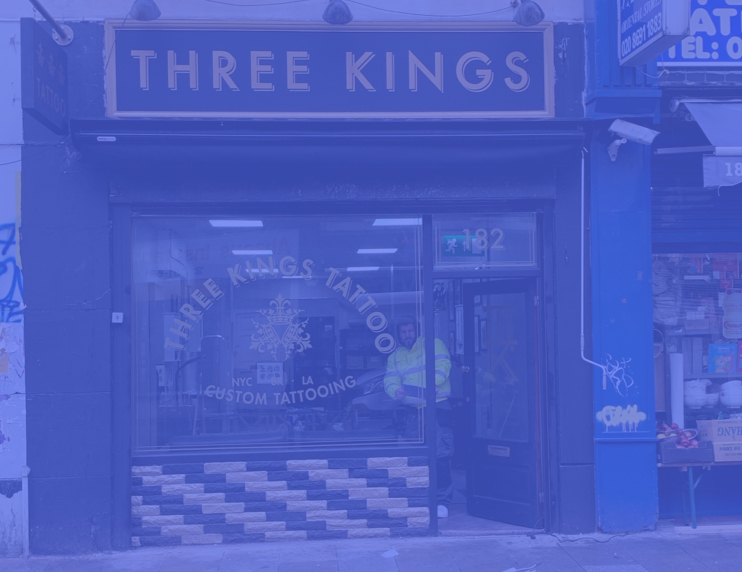
Three Kings Tattoo London has been open since July 2020. In January 2024 they switched to SplitSum for card payments. The change was about how money moves on the day, not a tax product.
The problem
Like a lot of studios, Three Kings worked with self-employed artists on a percentage split. Clients wanted to pay by card. Traditional card readers put the whole sale into one business account, then someone had to work out each artist’s share and pay them later.
That meant spreadsheets, payouts, and the shop holding money that was not theirs. Other studios cope by going cash-only, giving each artist their own reader, or employing people they would rather keep as contractors. None of those were a good fit and each creates its own headaches.
What SplitSum does
SplitSum splits the card payment when the client pays. The studio’s share goes to the studio. The artist’s share, including tips, goes to the artist.
For Three Kings that meant they could take card and phone payments without becoming the bank for every artist. Front of house takes the payment. Artists can see their own transactions and send deposit links. The owner is not reconciling a lump sum every week.
What we do not claim
SplitSum does not make a business VAT or tax compliant. Payment routing is only one part of that picture, and using SplitSum alone does not change someone’s VAT position. Whether anything about turnover or VAT is different for a given studio depends on the real working arrangements, who is making the supply, and how the accountant treats it. We do not give tax advice. Speak to a qualified accountant about your own setup.
The useful result at Three Kings was operational: card payments that match the agreed split, without the admin.
If you want to see the shop setup in more detail, there is a case study here. We also offer a 14-day trial and setup calls if you want a walkthrough.



 Copyright © 2026 SS Pay Ltd T/A SplitSum